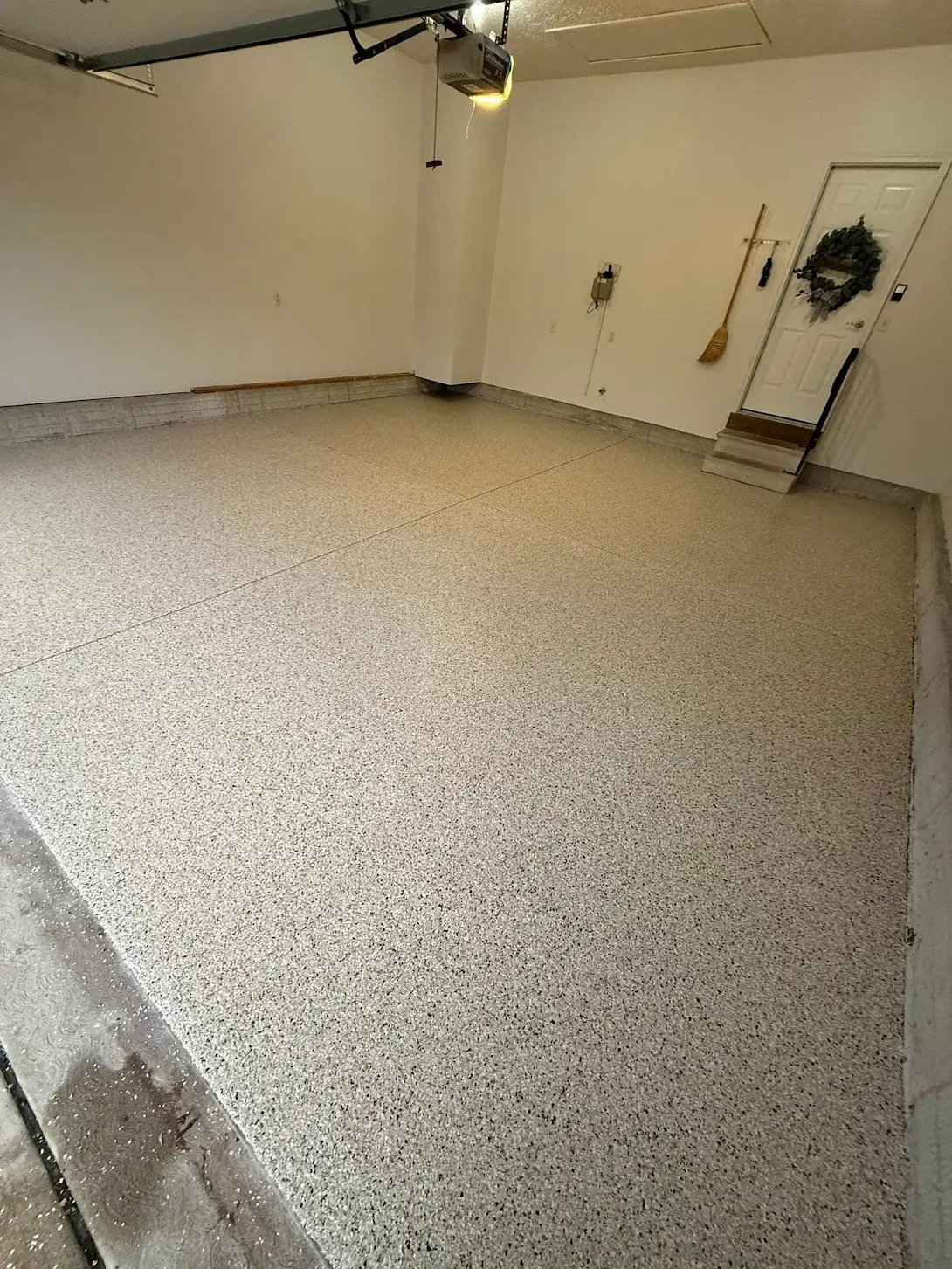
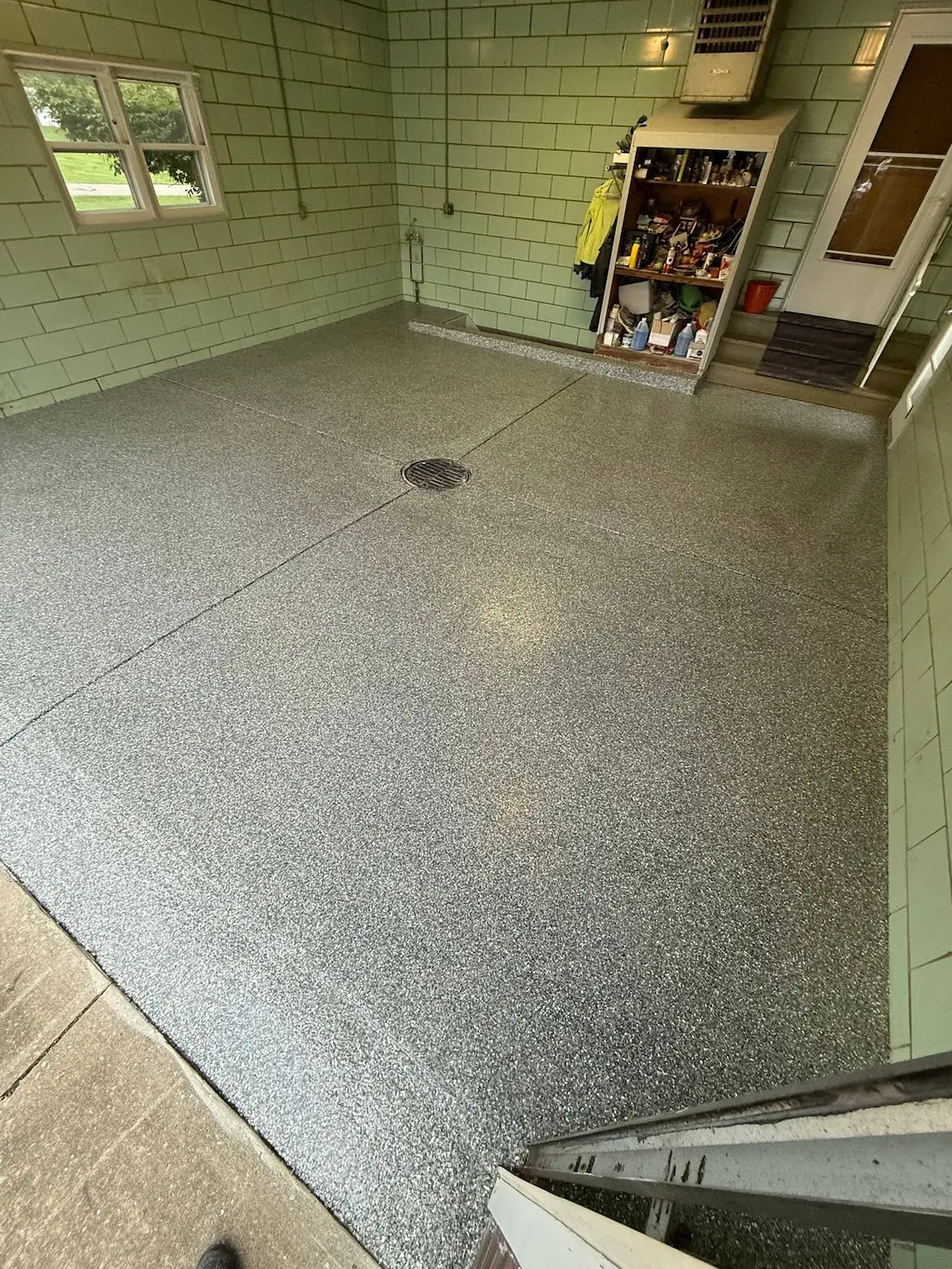
Epoxy Flake Floors in Northeast Ohio

Decorative flake broadcast to full coverage over an epoxy base, then sealed under a clear polyaspartic topcoat. It gives you texture underfoot, hides dirt between cleanings, and works in garages, basements, workshops and commercial spaces. Installed in 1–2 days with a written 4–5 year warranty.

Preview a Blend
  • 5.0 on Google
  • Insured & bonded
  • Local Canal Fulton crew
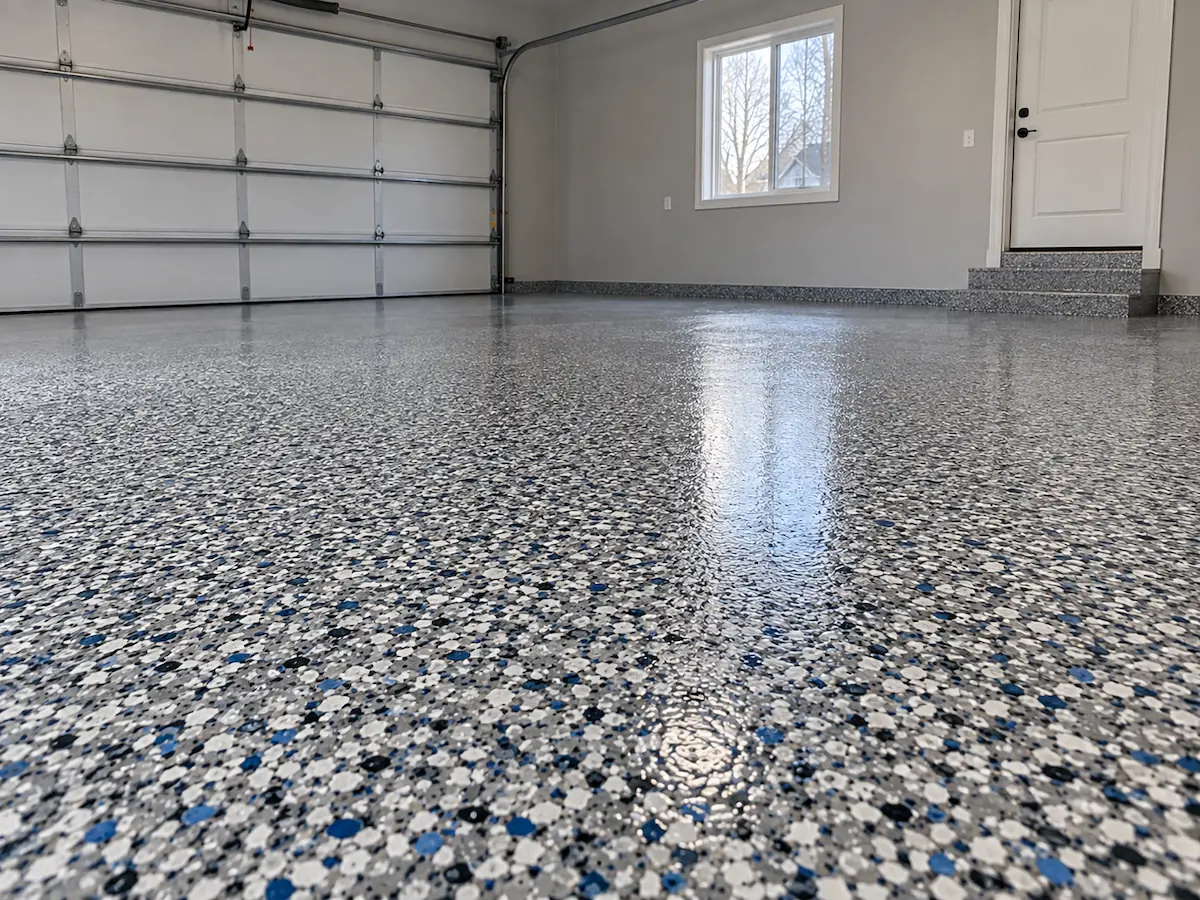
Glossy full-broadcast epoxy flake floor in a gray, white and blue blend with a polyaspartic topcoat
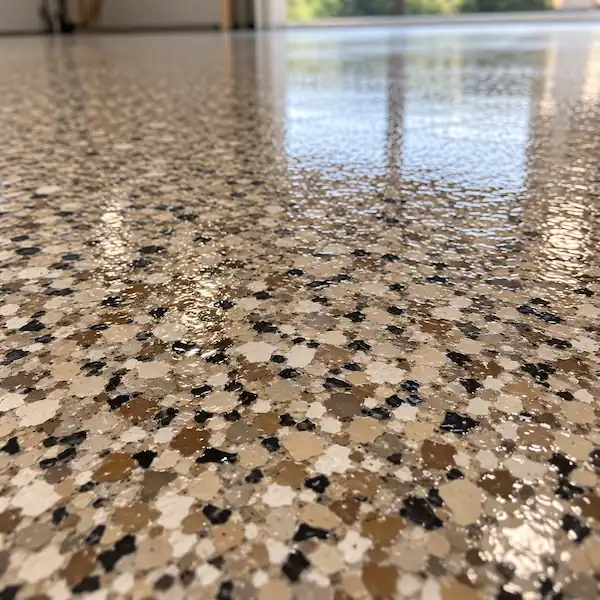
Close-up of a warm tan epoxy flake blend sealed under a clear glossy topcoat

What is an epoxy flake floor?

An epoxy flake floor is a seamless concrete coating made of three parts: an epoxy base coat bonded to ground concrete, a layer of decorative vinyl flakes broadcast into that base coat while it is wet, and a clear protective topcoat over everything. The flakes give the floor its speckled, granite-like look, add thickness and texture, and hide dust and small imperfections in the slab.

JDS Concrete Coatings installs full-broadcast epoxy flake floors across Northeast Ohio, including Canton, Massillon, North Canton, Jackson Township, Green and Akron. Every flake floor we install is diamond-ground first, built on a moisture-vapor-barrier epoxy base coat, and finished with a UV-stable polyaspartic topcoat.

System
Epoxy base, flake, polyaspartic topcoat
Coverage
Full broadcast
Surface prep
Diamond grind
Install time
1–2 days
Warranty
Written, 4–5 years
Best for
Garages, basements, shops, commercial
Service area
Stark & Summit counties
Try it

Three Choices Decide How Your Flake Floor Looks

Blend, flake size and coverage. Change each one below and watch the floor get broadcast again.

Showing: Cool gray, 1/4 inch flake, full broadcastNot to scale.

Blend
Flake size
Coverage

Blend

A blend is a mix of several flake colors, not one color. Grays and charcoals are the most forgiving with dust and the easiest to match to almost any wall or cabinet color. Tans and earth tones suit basements and rooms that connect to the rest of the house.

Lighter blends make a space feel brighter and bigger. Darker blends hide more, but show light-colored dust sooner.

Flake size

Quarter-inch flake is the standard for garages and most floors. It reads as a bold, granite-like speckle and gives the most texture underfoot. Eighth-inch flake is finer and tighter, closer to a terrazzo look, and tends to suit basements, mudrooms and commercial interiors.

Coverage

This is the one that matters for how the floor wears. A light sprinkle, which is what most DIY kits give you, leaves bare coating between the chips, so the floor is only as tough as that one thin coat.

JDS installs full broadcast only. Flake goes down until the wet base coat cannot take any more, which makes the flake itself a solid layer of the floor. That adds thickness, evens out the texture, and leaves nothing thin to wear through.

The preview is an illustration. A screen cannot show real color, gloss or texture accurately, so the final blend is chosen with you at your on-site quote.

Where Flake Floors Work, and Where They Don't

Flake is the most versatile finish we install, but it is not the answer to every floor. Here is where it earns its keep in a Northeast Ohio home or business, and where we would point you to something else.

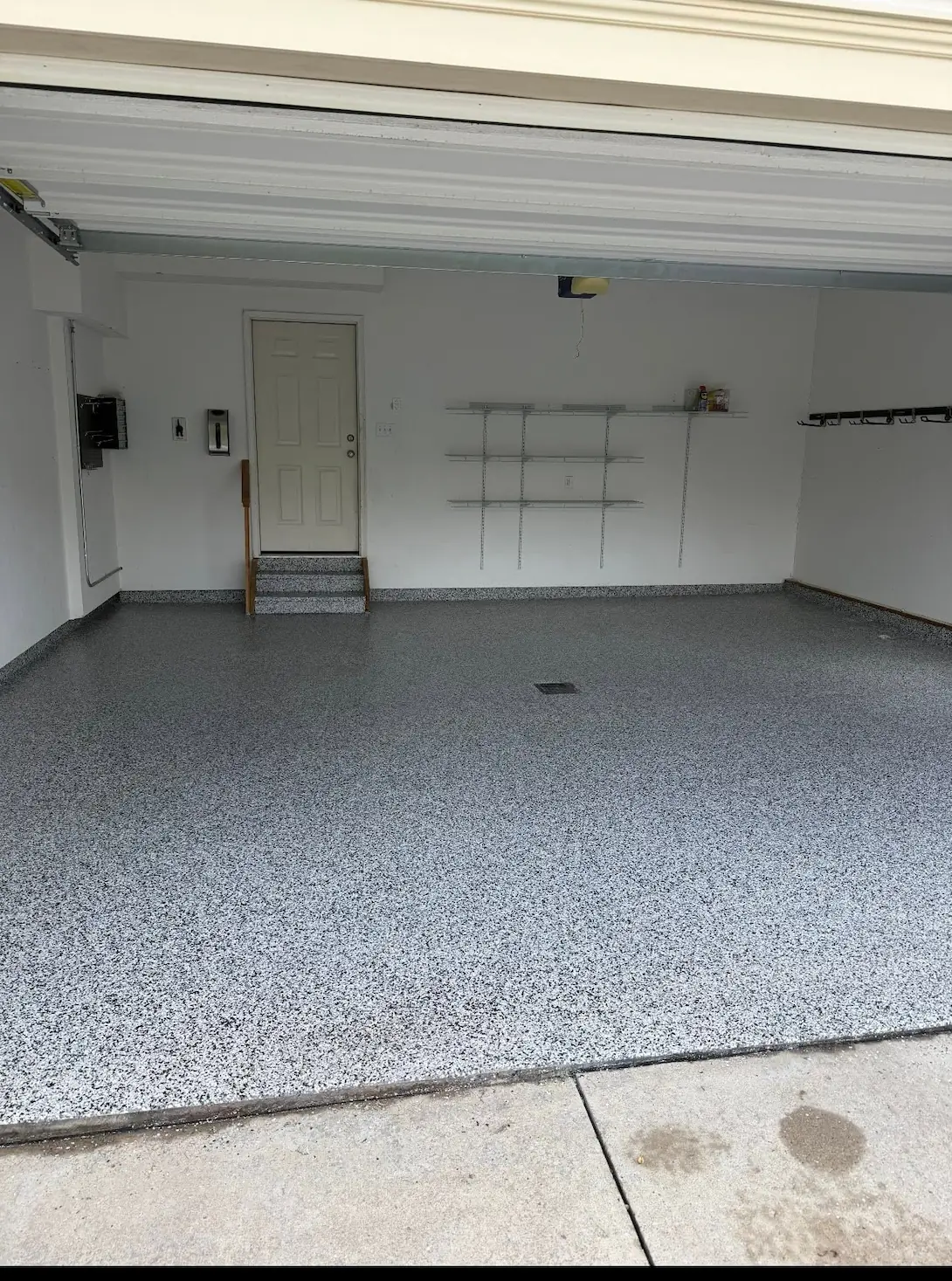
Full-broadcast epoxy flake floor in a Northeast Ohio garage by JDS Concrete Coatings

Garages

The most common home for a flake floor. The texture gives you footing when snowmelt is on the floor, the speckle hides dust between sweeps, and the sealed topcoat keeps road salt on the surface instead of in the concrete.

See garage floor coatings
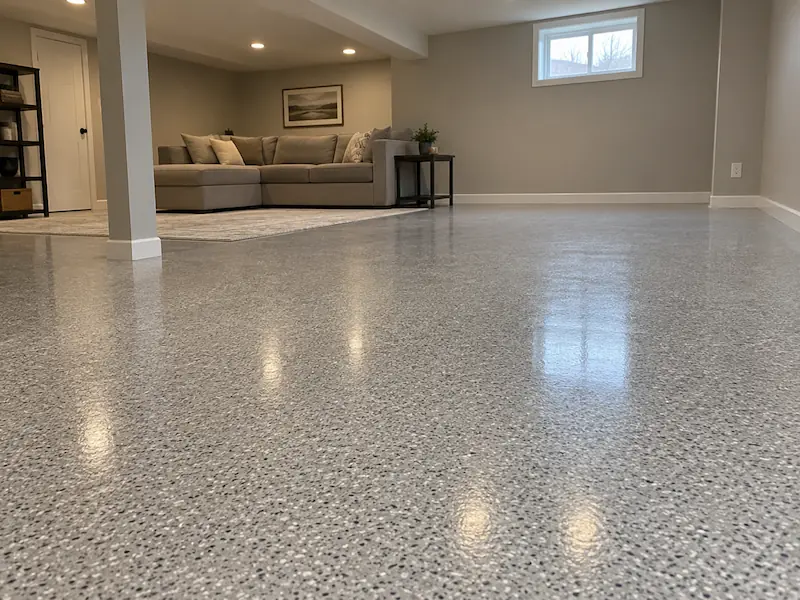
Light gray epoxy flake floor in a finished basement with a sofa and a basement window

Basements

Flake turns a bare, dusty slab into a finished floor without adding the height that tile or plank does. Basement slabs sit below grade, so the moisture-vapor-barrier base coat does its most important work here.

A finer flake in a lighter blend keeps a basement from feeling like a garage.

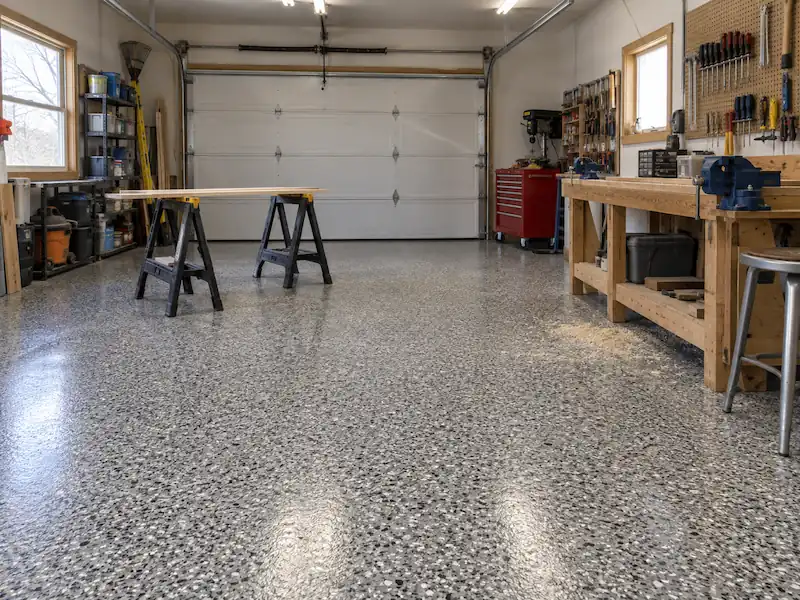
Epoxy flake floor in a home workshop with a workbench, pegboard and sawhorses

Workshops and hobby rooms

Dropped tools, rolling tool chests, sawdust and glue. Flake takes the abuse and does not show every scuff. One honest trade-off: a dropped screw is harder to spot on flake than on a plain floor. A lighter, finer blend helps.

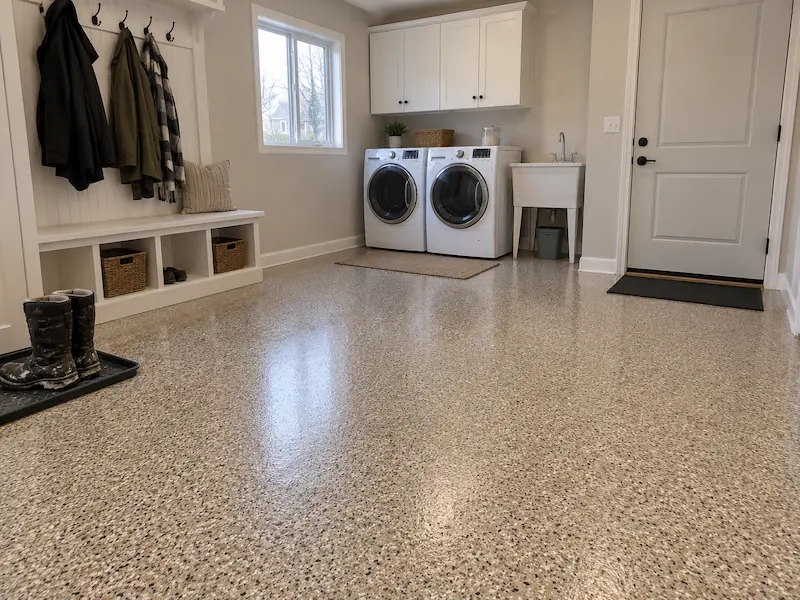
Seamless tan epoxy flake floor in a mudroom and laundry room with a bench, boot tray, washer and dryer

Mudrooms, laundry and utility rooms

One seamless surface with no grout lines to scrub and no seams for water to get under. It mops clean, and wet boots in February are not a problem.

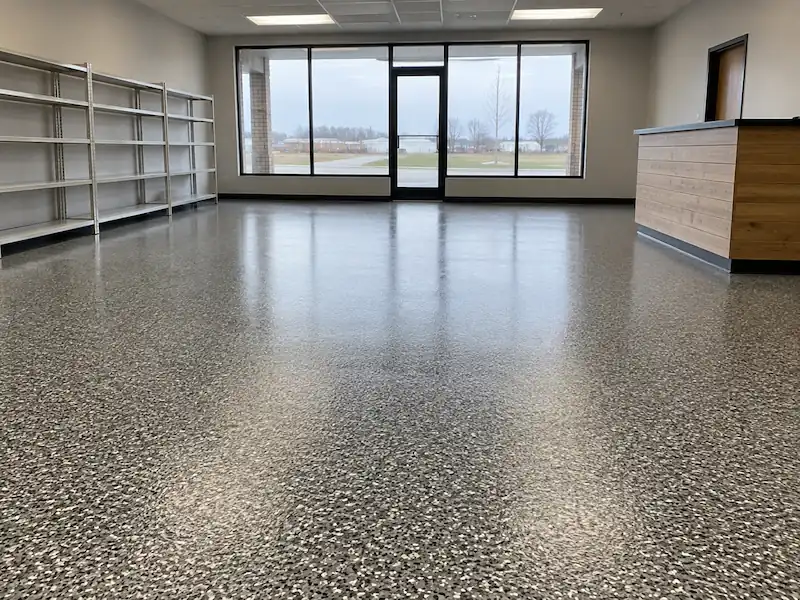
Charcoal epoxy flake floor in a small retail shop with storefront windows and a sales counter

Commercial spaces

Shops, showrooms, restrooms, break rooms and light-duty warehouse floors. Flake is easy to keep presentable under steady foot traffic, and the fast-curing topcoat keeps downtime short.

See commercial floor coatings

Flake vs. Metallic vs. Quartz: Which Epoxy Floor Fits?

All three start with the same diamond-ground prep and epoxy base. What changes is what goes into the floor, and that changes how it looks, feels and wears.

Feature Epoxy flake Metallic epoxy Quartz
The lookSpeckled and granite-like, in a blend of several colorsHigh-gloss, marbled and one of a kindFine, uniform colored sand
Texture underfootLight texture, comfortable in bare feetSmoothThe grittiest of the three
Hides dust and slab repairsVery wellPoorly. Dust, footprints and fine scratches show soonerWell
Grip when wetGoodThe least of the threeThe most of the three
Best suited toGarages, basements, workshops and most commercial floorsShowrooms, finished basements and showpiece garagesHeavy-use work areas and floors that are often wet
The honest drawbackSmall dropped items are harder to spotNeeds more care to keep looking its bestRougher to mop, fewer decorative options

Swipe sideways to see metallic and quartz.

How a Flake Floor Goes Down

Four stages over 1–2 days. The flake is the part you see, but the first stage decides whether the floor lasts.

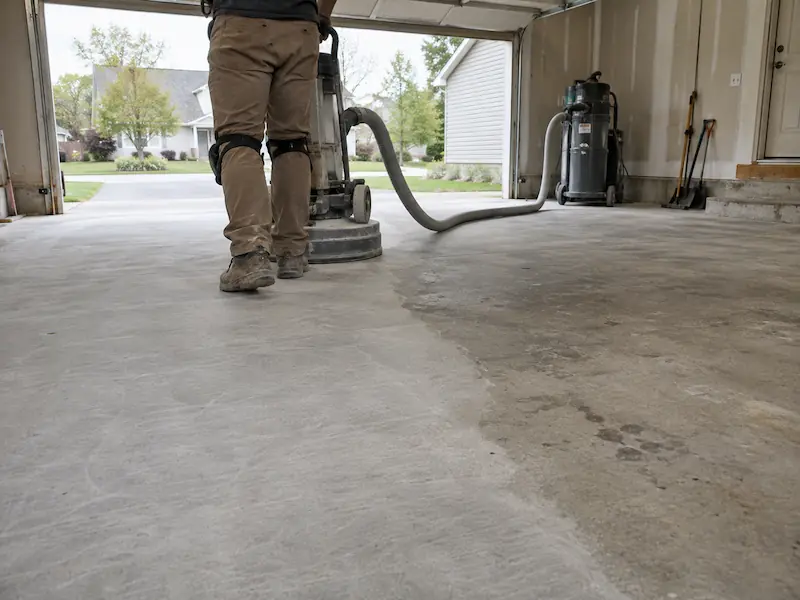
  1. Diamond grinding a concrete floor with dust extraction before an epoxy flake coating

    Grind and repair

    The concrete is diamond-ground to open the surface and remove old paint or sealer. Cracks and pits are filled and ground flush.

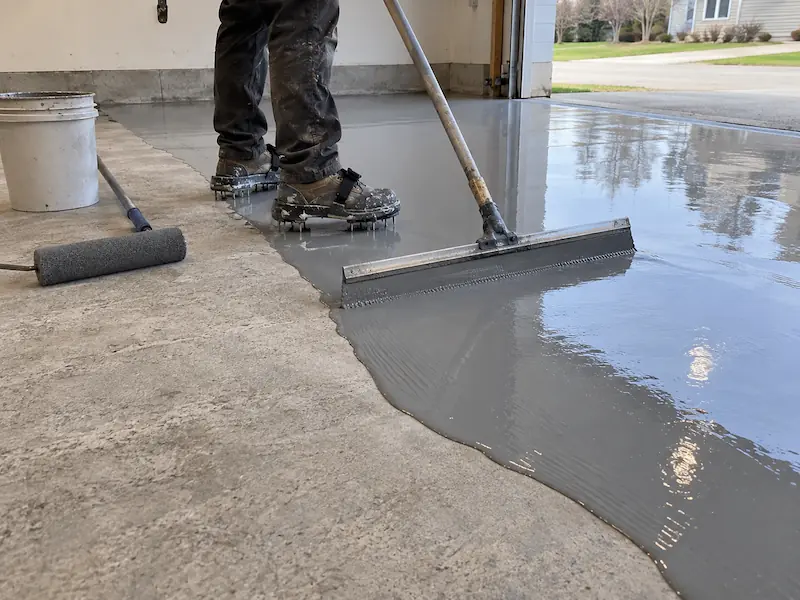
  2. Pigmented epoxy base coat being spread across a ground concrete floor with a squeegee

    Epoxy base coat

    A pigmented, moisture-vapor-barrier epoxy goes down across the whole floor. Its color is matched to the blend, so the base never shows through as a mismatch.

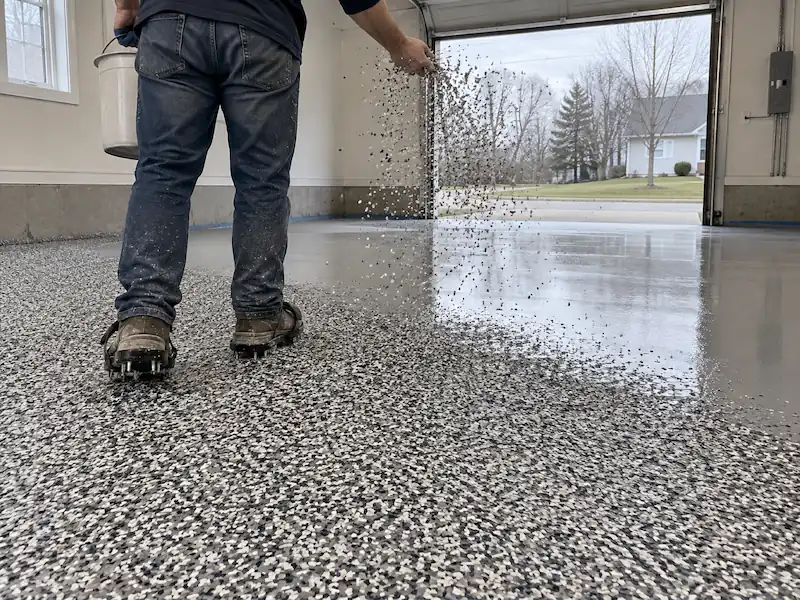
  3. Installer in spiked shoes broadcasting decorative flake into a wet epoxy base coat

    Broadcast to refusal

    While the base coat is wet, flake is thrown up and out so it rains down evenly, until the floor will not take any more. Then it is left to set.

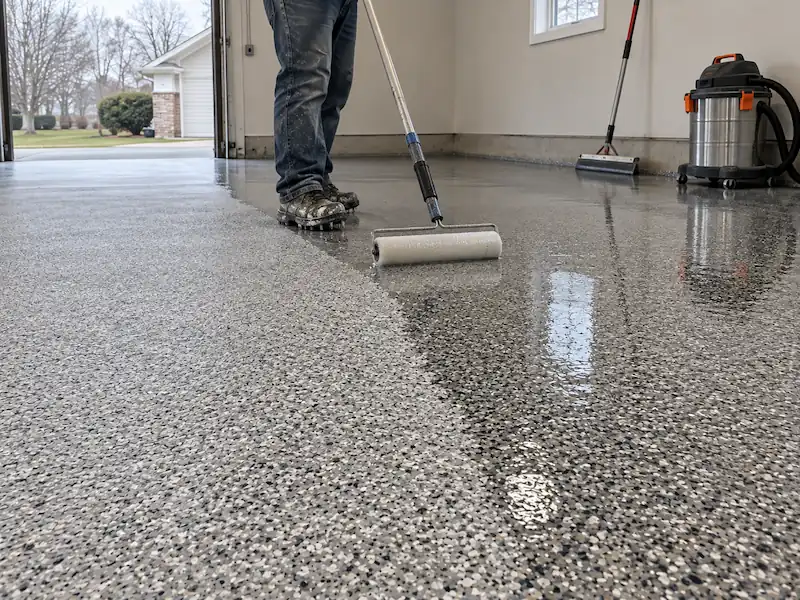
  4. Clear polyaspartic topcoat being rolled over a full-broadcast flake floor, glossy where coated and matte where not

    Scrape, vacuum, topcoat

    Loose and standing flake is scraped flat and vacuumed off, then a clear polyaspartic topcoat seals the surface. That step sets how smooth or textured the floor feels.

Plain English

Flake Floor Terms, Translated

Quotes for epoxy flake flooring are full of trade words. Here is what they mean, so you can compare one installer's quote with another's.

Full broadcast
Flake covers 100% of the floor, with no bare coating visible between chips. Also called full flake or full coverage.
Broadcast to refusal
Throwing flake into the wet base coat until it stops sinking in and starts piling on top. It is how full broadcast is achieved. Some installers say "to rejection."
Partial broadcast
A light scatter of flake with the base color showing between the chips. Cheaper, thinner and less durable. It is what most DIY kits produce.
Flake size
The rough width of the chips. 1/4 inch is the common standard; 1/8 inch is finer. Smaller flake gives a tighter, smoother-looking floor.
Blend
A pre-mixed combination of flake colors. Most floors use a blend of three to five colors rather than one.
Moisture-vapor barrier
An epoxy base coat made to stop moisture vapor rising through the slab from pushing the coating off. It is the layer budget installs leave out.
Back-scrape
Scraping the cured flake flat before the topcoat, which knocks down chips standing on edge. Skip it and the floor feels sharp and traps dirt.
Polyaspartic
The clear topcoat. It cures fast, resists chemicals and abrasion, and stays clear in sunlight where epoxy would yellow.
Our work

JDS Flake Floors in Northeast Ohio

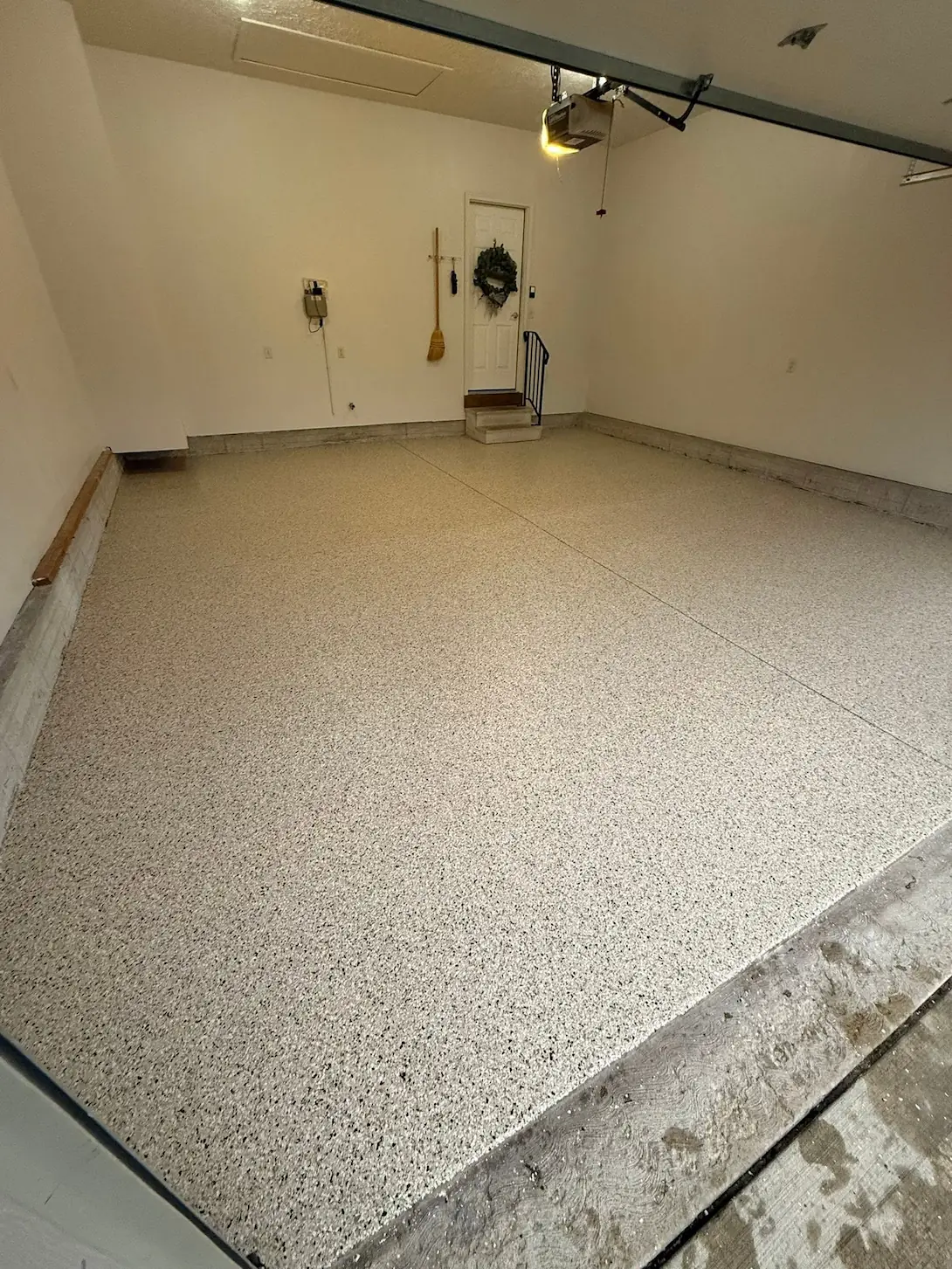
Clean full-broadcast epoxy flake floor in a Northeast Ohio garage
Full-broadcast flake, wall to wall
Epoxy flake flooring with polyaspartic topcoat by JDS Concrete Coatings in Stark County, Ohio
Gray blend under a clear polyaspartic topcoat
Finished epoxy flake floor coating in Northeast Ohio
Ground, coated and flaked edge to edge
Epoxy flake floor in a finished interior space in Northeast Ohio
Flake in a finished space
5.0

Rated 5.0 by local customers on Google

Epoxy flake flooring near you

Installed Across Stark and Summit Counties

JDS Concrete Coatings installs epoxy flake floors from its base in Canal Fulton, along the Ohio & Erie Canalway between Massillon and Akron. Flake suits the attached garages of Jackson Township, North Canton and Green, the basements of older Massillon and Canton homes where the slab has never been sealed, and shop and commercial floors out toward Navarre, Hartville and Uniontown.

Northeast Ohio is hard on floors in a specific way: months of tracked-in salt and slush, then humid summers that push moisture up through the slab. A full-broadcast flake floor on a moisture-vapor-barrier base is built for both.

  • Canal Fulton
  • Massillon
  • Canton
  • North Canton
  • Jackson Township
  • Green
  • Uniontown
  • Hartville
  • Navarre
  • Akron

Nearby but not listed? Call (330) 575-5513 and we'll tell you right away whether we can get to you.

Epoxy Flake Floor Questions

They are thin, colored vinyl-acrylic chips made for floor coatings. They are not paint chips or stone. Several colors are mixed into a blend, broadcast into a wet epoxy base coat, and then locked in under a clear topcoat so they cannot lift or fade.

Full broadcast means flake covers the entire floor, thrown into the wet base coat until it will not take any more. Partial broadcast is a light scatter with the base color showing between chips. Full broadcast is thicker, more evenly textured and longer lasting, and it is the only way JDS installs flake.

Quarter-inch flake is the standard for garages and most floors, with a bold speckle and the most texture underfoot. Eighth-inch flake gives a finer, tighter look that often suits basements, mudrooms and commercial interiors. Neither is tougher than the other. It comes down to the look you want and how much texture you want to feel.

Yes, and it is a good fit. It adds almost no height, has no seams or grout, and does not mind a damp mop. Because basement slabs sit below grade, the moisture-vapor-barrier base coat matters more here than anywhere. If a basement has active water coming in, that needs to be fixed before any coating goes down.

No. After the flake is scraped flat and sealed under the topcoat, the surface has a light, even texture, a little like the skin of an orange. It is enough to give you footing when the floor is wet, but comfortable to walk on barefoot. Finer flake feels smoother still.

Better than any other finish. Cracks and pits are repaired and ground flush first, and a full-broadcast flake pattern then disguises those repairs far better than a solid color or a metallic floor would. A coating is not a structural fix, though, so a slab that is still moving can show a crack again over time.

A professionally installed, full-broadcast flake floor over diamond-ground concrete is built to last for years, and JDS backs each one with a written 4–5 year warranty. DIY flake kits, by comparison, often start peeling within 1–3 months because they skip the grinding and the moisture barrier.

In most cases, yes. Because the flake sits under a clear topcoat, a floor that has dulled after years of use can usually be cleaned, lightly abraded and given a fresh topcoat without redoing the whole system. We would look at the floor first to confirm it is a candidate.

See Flake Blends On Your Own Floor

We'll come out, measure the space, check the concrete and go through blends with you where the floor will actually live. The quote is fixed, free, and there's no pressure to book.

(330) 575-5513
Mon–Sat, 7am–7pm
Call