Open it, clean it, fill it
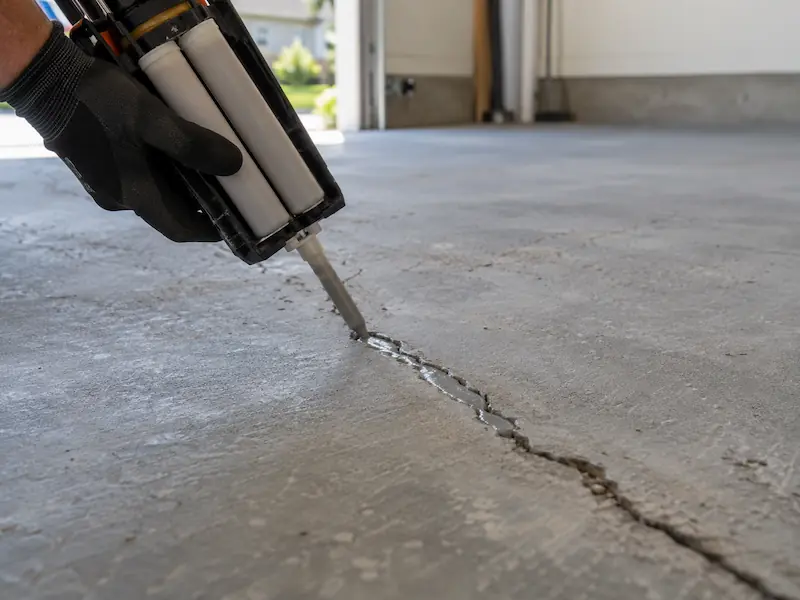
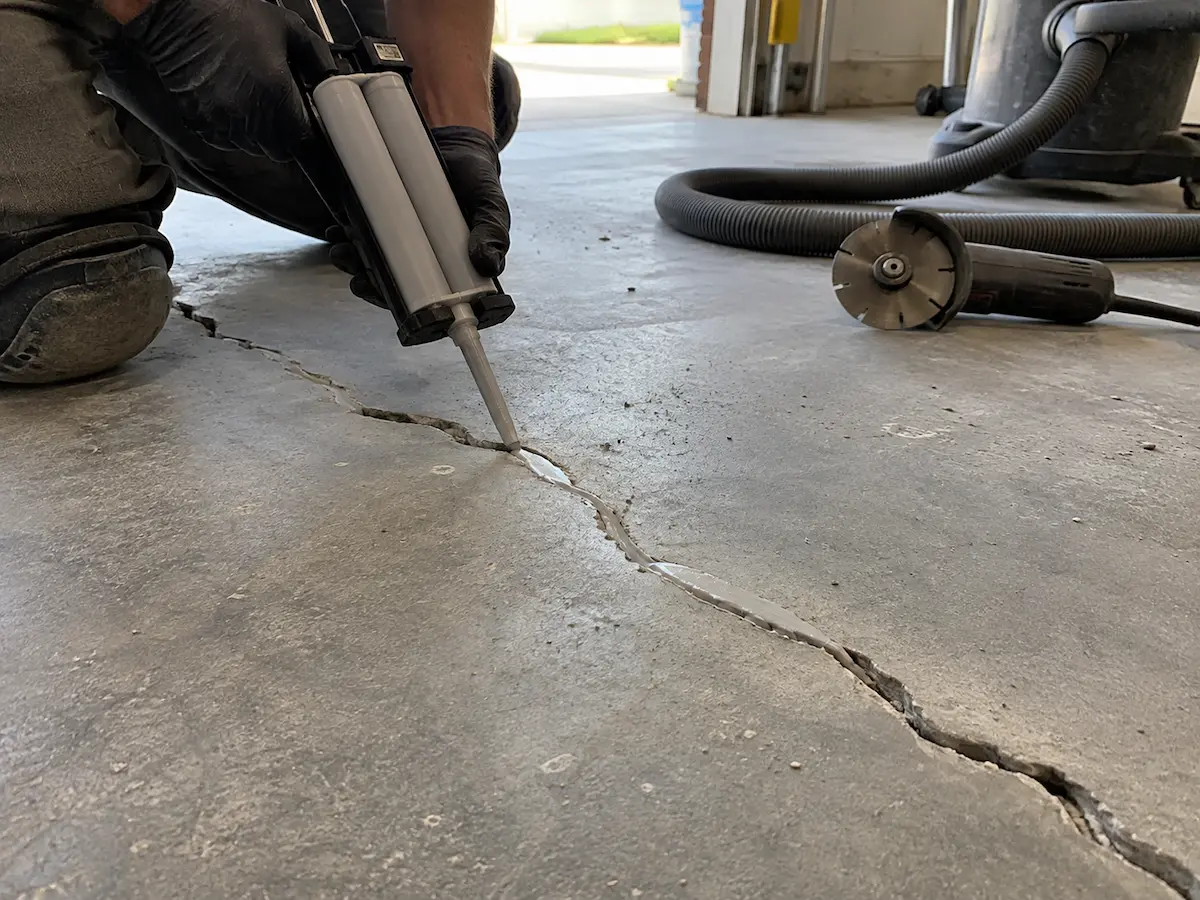
The crack is chased with a diamond blade so it has clean, solid edges, then vacuumed out. It is filled with a two-part repair material that bonds to the concrete and cures hard, not a soft caulk that peels back out.
Cracks, pitting and flaking in a garage floor, basement slab, patio or shop floor. We tell you what kind of crack it is, whether it matters, and what it takes to fix it properly, then repair it so it stays repaired through an Ohio winter.
Yes. Most cracks, pits and flaking in a concrete floor can be repaired without replacing the slab, as long as the concrete underneath is still sound and has stopped moving. The crack is opened up and cleaned, filled with a repair material that bonds to the concrete, and ground flush. Spalled and pitted areas are cut back to solid concrete and rebuilt. Sealing or coating the floor afterward keeps water and road salt out, which is what stops the damage from coming back.
JDS Concrete Coatings repairs concrete floor slabs across Northeast Ohio, including Canton, Massillon, North Canton, Jackson Township, Green and Akron. If a slab is past repairing, we will tell you that at the quote rather than sell you a fix that will not hold.
Not every crack is a problem, and a few are bigger than they look. Pick the one that looks most like yours to see what it is, what caused it, and what we would do about it.

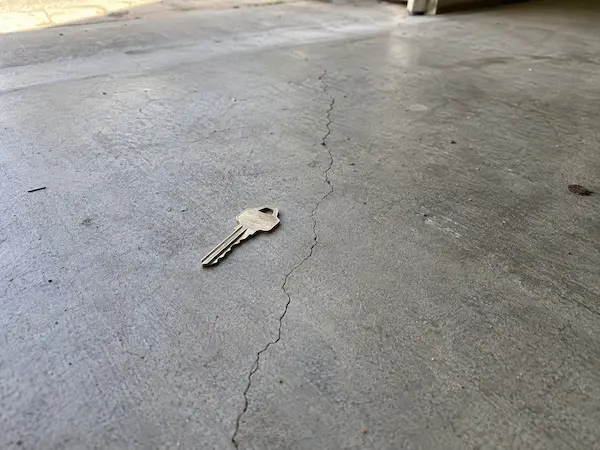
Thin, wandering lines you can barely fit a fingernail into. Nearly every slab has them. They form as new concrete dries and shrinks, usually in the first year.
What we do: clean them out, fill them and grind flush. Under a flake coating they disappear completely.

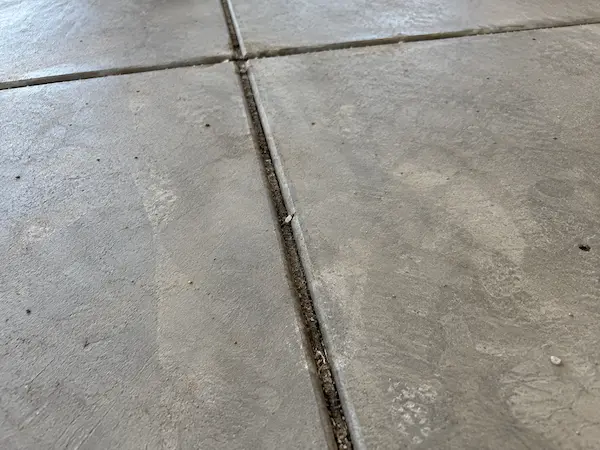
Those straight grooves cut into your floor are control joints. They exist to make the slab crack there, in a straight line, instead of randomly. A crack in the joint means it did its job.
What we do: clean the joint and fill it with a filler firm enough to support traffic but flexible enough to move with the slab.

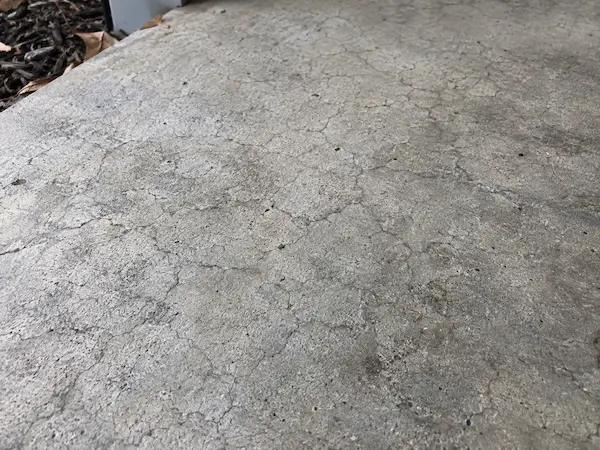
A fine web of shallow cracks that looks like dried mud, also called crazing. It happens when the surface dried too fast on the day it was poured. It is only skin deep.
What we do: diamond grinding removes most of it, and a coating seals and hides the rest.

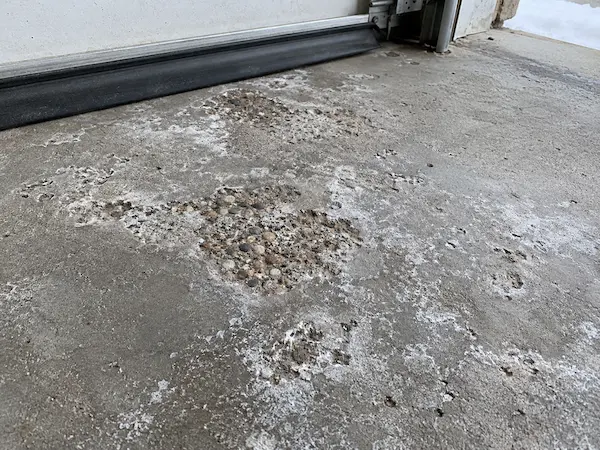
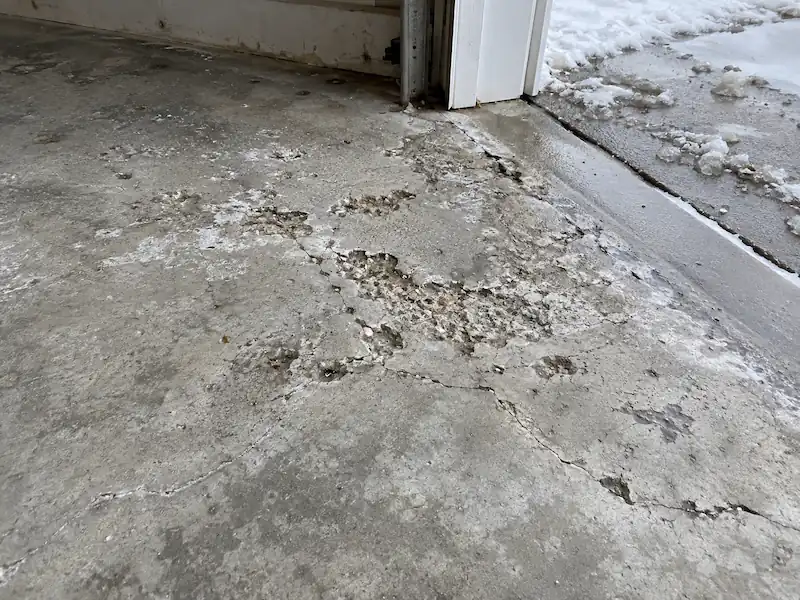
The top layer flaking off in patches, or a rash of small pits, usually worst just inside the garage door. It is caused by road salt and water soaking in and freezing. It gets worse every winter it is left.
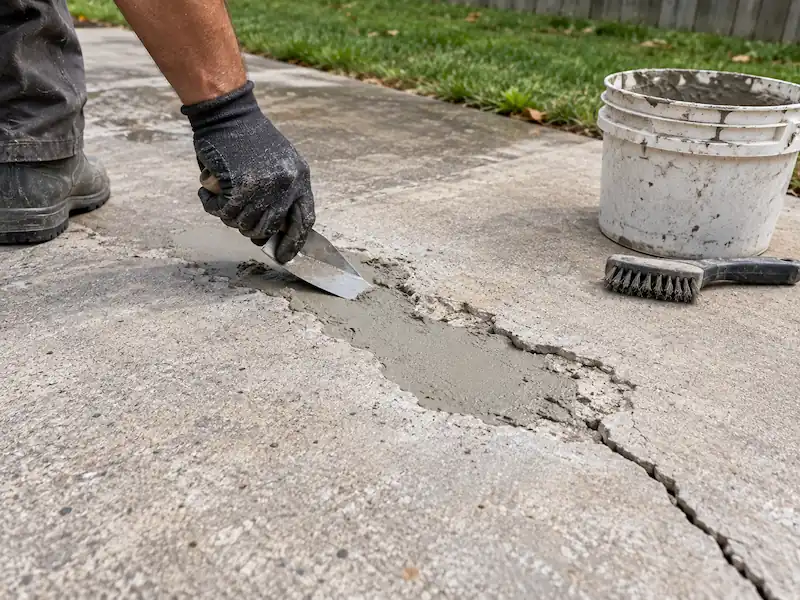
What we do: grind back to solid concrete, rebuild the surface with repair mortar, grind it flush, then seal or coat the floor so salt water cannot get back in.

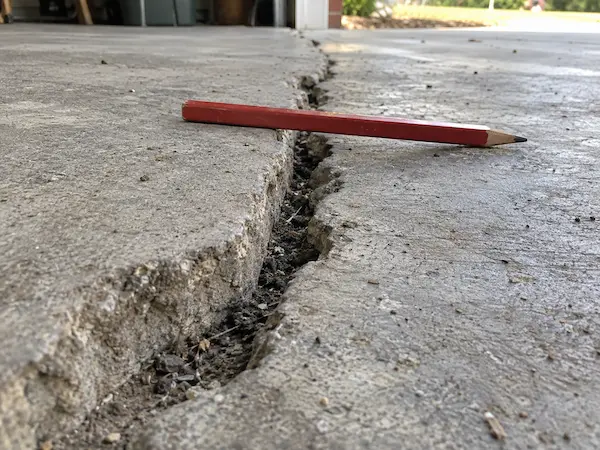
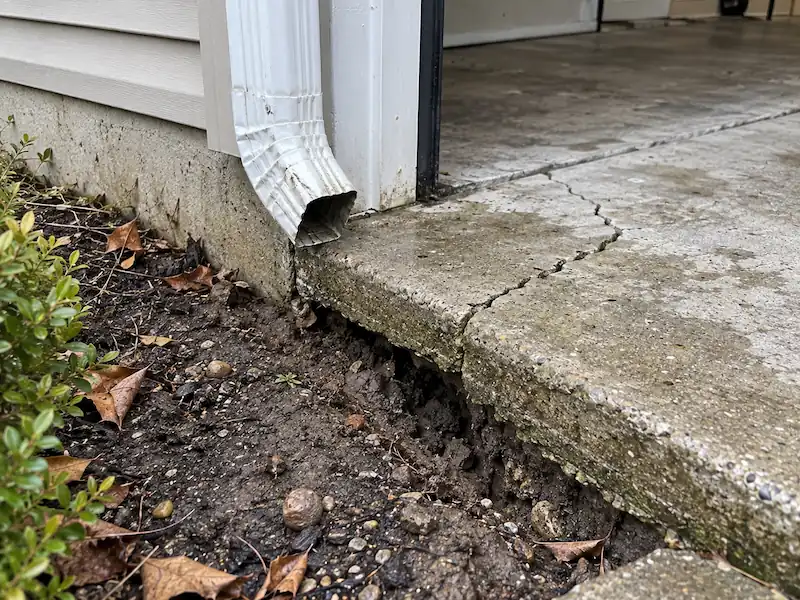
Wider than about 1/8 inch, roughly two stacked pennies, or with one side sitting higher than the other. That means the ground under part of the slab has settled or washed out, often from a downspout or poor drainage.
What we do: if the movement has stopped, we can fill the crack and grind the lip down. If it is still moving, the cause has to be fixed first, and that may mean a drainage or slab-lifting contractor before us.

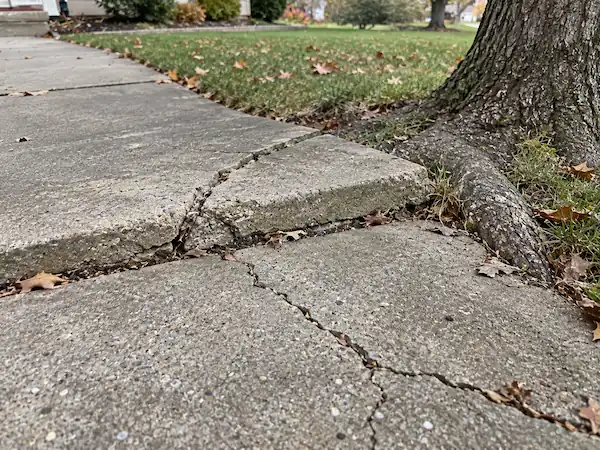
Part of the slab pushed upward, with cracks running out from the high spot. Frost under the slab or a tree root is usually behind it.
What we do: be straight with you. Filling and coating will not hold down a slab that is being pushed up. The root or the drainage has to be dealt with, and that section may need replacing.
This guide is for concrete floor slabs and is a starting point, not an engineering assessment. Cracks in foundation or basement walls, or anything affecting the structure of the house, should be looked at by a structural engineer or foundation specialist.
Concrete is strong when you squeeze it and weak when you pull it. Around here, five things do most of the pulling.
Water soaks into unsealed concrete, freezes, expands and thaws, dozens of times a winter. Each cycle pries the surface apart a little more. It is the main reason slabs here scale and pit.
Salt pulls more water into the concrete and makes it go through even more freeze-thaw cycles. The strip just inside the garage door, where slush melts, always goes first.
Much of Stark and Summit County sits on heavy glacial clay. It swells when it is wet and shrinks when it dries, so the ground under a slab rises and falls with the seasons and takes the concrete with it.
A downspout that empties beside the slab, or a yard graded toward the garage, washes out the soil underneath. The unsupported concrete settles and cracks.

All concrete shrinks as it cures. If the mix was too wet, the joints were cut too late, or it dried too fast on a hot day, it cracks early. Those cracks are usually the harmless kind.
A tube of caulk pressed into a dirty crack is not a repair. These are the three things that make one last.

The crack is chased with a diamond blade so it has clean, solid edges, then vacuumed out. It is filled with a two-part repair material that bonds to the concrete and cures hard, not a soft caulk that peels back out.

Loose and weakened concrete is ground away until we reach solid material. The area is rebuilt with repair mortar, shaped level with the floor around it, and left to cure.

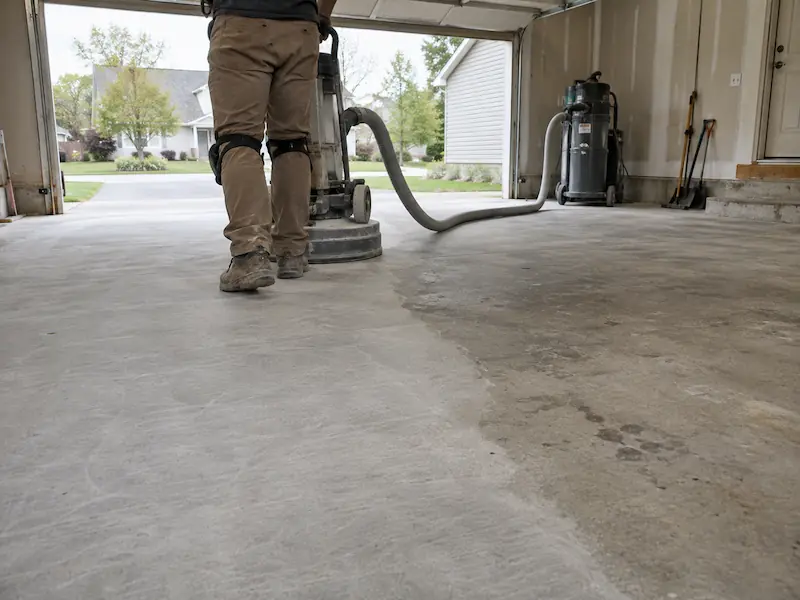
Every repair is diamond-ground level with the slab, so there is no ridge to catch a toe or a broom. Then the floor is sealed or coated, because a repair left open to water and salt is a repair on borrowed time.
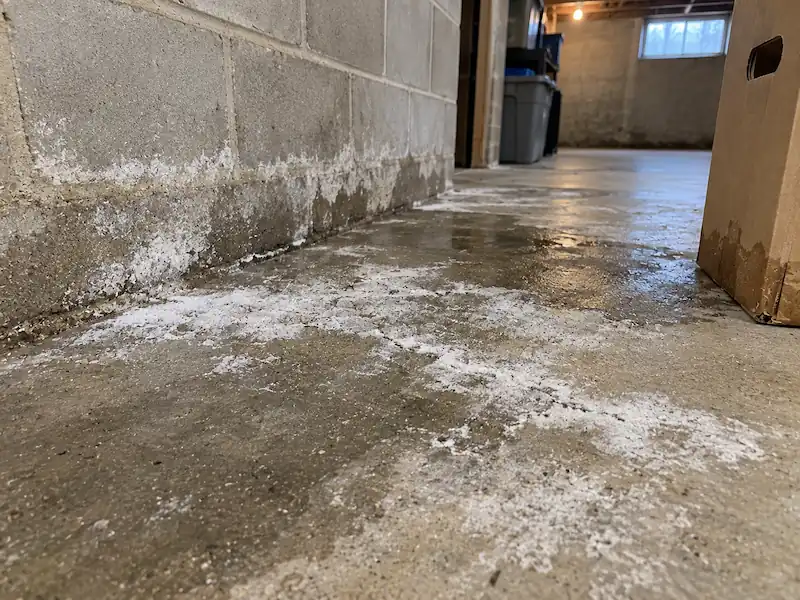
Concrete is porous. Moisture from the ground travels up through it as vapor, all year round. It is harmless to the slab, but it is the top reason paints and coatings peel.


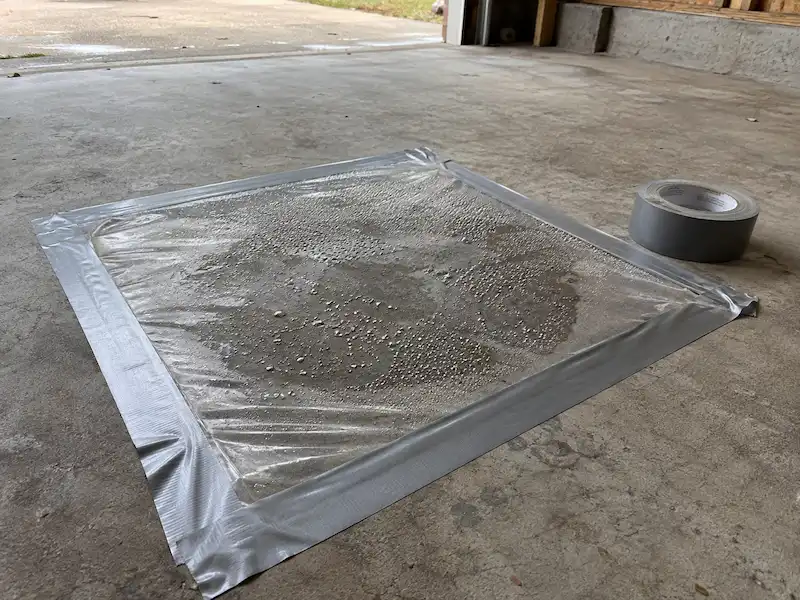
Tape a two-foot square of clear plastic sheeting flat to the bare concrete, sealing all four edges. Leave it for a day or two. If the concrete under it turns darker, or water beads on the underside of the plastic, moisture is coming up through the slab. Tell us what you find when you call.
Both are honest options. The difference is how the floor looks afterward and how well it is protected from the thing that damaged it.
| Repair only | Repair and coat | |
|---|---|---|
| How it looks | Sound and level, but the repairs show as lines and patches of a different gray | Repairs vanish under the coating. The floor looks new |
| Protection from salt and water | The repair is sealed, the rest of the slab is not | The whole floor is sealed, wall to wall |
| Chance of new damage nearby | The same conditions are still there | Much lower. Water and salt can no longer soak in |
| Dust and cleaning | Bare concrete still dusts and stains | Sweeps and mops clean |
| Best when | You need it safe and sound, and looks do not matter | You want the problem solved for good and a floor worth looking at |
Swipe sideways to compare.
Most repair work is done in a day. When it is part of a coating, it is simply the first stage of the 1–2 day install.
We check every crack for width, height difference and signs of movement, look at drainage and downspouts, and tell you what is cosmetic and what is not.
Cracks are chased with a diamond blade, spalled areas are ground back to solid concrete, and everything is vacuumed out. Repairs only bond to clean concrete.
Cracks and joints are filled, pits and spalls are rebuilt with repair mortar, and the material is left to cure.
Repairs are ground level with the floor, then the slab is sealed or moves straight into its coating. You get care advice and your written warranty.
Sometimes, yes. Here is an honest line between the two.
A hairline crack in a shed, a utility room or a corner nobody looks at. It is cosmetic, it is not moving, and you are not planning to coat the floor. Clean it well, fill it, and get on with your weekend.

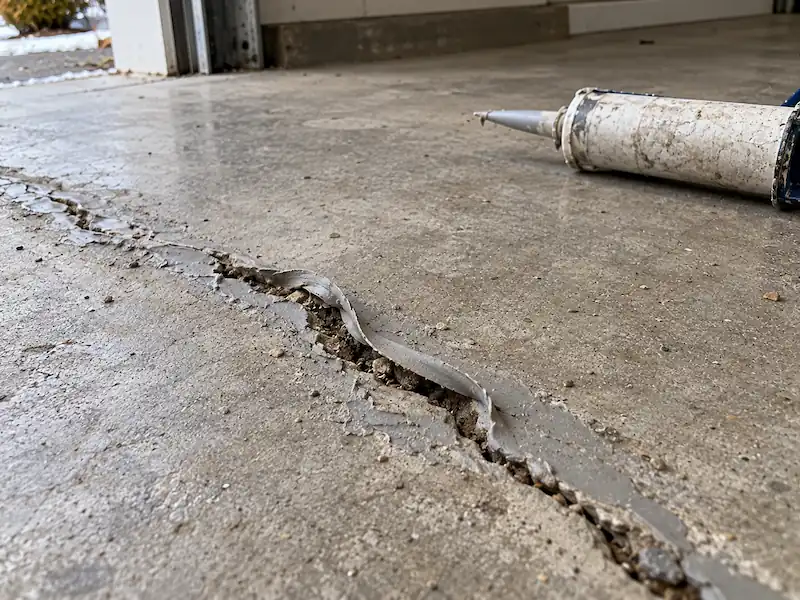
When the floor is going to be coated, when the crack is wide or uneven, or when the surface is spalling. Squeeze-tube fillers stay soft, shrink as they cure, and do not bond to a crack that has not been cut clean. One winter of freeze-thaw usually pops them back out.
A failed DIY filler also has to be dug out before a proper repair can go in, so it can cost more than doing nothing.
Read our reviews and look through recent projects, then ask us at your quote to see repairs we have done near you.
Rated 5.0 by local customers on Google
JDS Concrete Coatings is based in Canal Fulton, between Massillon and Akron. We repair salt-pitted garage floors in Jackson Township, North Canton and Green, decades-old basement and garage slabs in Canton, Massillon and Akron, and cracked patios, walkways and shop floors from Navarre to Hartville.
The same two things are behind most of the damage we see: a winter's worth of freeze-thaw and road salt from above, and heavy clay soil moving underneath. A local crew has seen both hundreds of times and knows which cracks to worry about.
Close by but not listed? Call (330) 575-5513 and we'll tell you right away whether we can get to you.
Usually not. Thin hairline cracks and cracks that follow the saw-cut joints are normal in almost every slab and are cosmetic. A crack deserves a closer look if it is wider than about 1/8 inch, if one side sits higher than the other, if it keeps getting longer or wider, or if part of the slab has lifted or sunk. Those are signs the ground underneath is moving.
A properly repaired crack in a slab that has stopped moving should stay repaired. If the slab is still moving because of settling soil, poor drainage, frost or tree roots, a crack can reopen or a new one can form beside it, no matter how good the filler is. That is why we look for the cause first, and tell you honestly when the cause needs fixing before the crack does.
Road salt and freeze-thaw. Salty meltwater soaks into unsealed concrete, freezes, expands and breaks the top layer apart from the inside. It is called spalling when the surface flakes off in patches and pitting when it forms small craters. It is most common just inside the garage door, and it gets worse every winter until the floor is repaired and sealed.
Yes. A coating follows whatever is underneath it, so an unrepaired crack or pit will show straight through the new floor, and it gives water a way in under the coating. Crack and surface repair is part of the prep on every JDS coated floor, along with diamond grinding and the moisture-vapor-barrier base coat.
We can deal with moisture vapor, which is what makes paint and coatings peel. On floors we coat, the first layer is a moisture-vapor-barrier epoxy base coat designed to hold it back. We cannot fix liquid water: standing water, leaks through walls or a basement that floods need drainage, grading, gutter or waterproofing work first.
No. JDS repairs concrete floor slabs: garage floors, basement floors, patios, walkways and shop floors. We do not repair foundation or basement walls, carry out structural repairs, or lift and level sunken slabs. For those you need a foundation specialist, a structural engineer or a concrete leveling company, and we are glad to tell you which one your situation calls for.
Most repair work is completed in a day. When the repair is the first stage of a floor coating, it is included in the 1–2 day install. We tell you at handover exactly when the floor can be walked on and put back into normal use.
It depends on how many feet of cracking there are, how much spalled or pitted surface needs rebuilding, and whether the floor is being sealed or coated afterward. When repair is part of a coating, it is built into that quote. JDS looks at the slab in person and gives you a fixed quote. On-site quotes are free and there is no obligation.
If the slab is solid and level but cracked, pitted or ugly, repairing and coating it costs far less than replacing it and gives you a better floor than new bare concrete. Replacement makes sense when the slab has heaved, sunk or broken into pieces that move independently. We will tell you which side of that line yours is on.
We'll look at the crack, find out what caused it, and tell you whether it needs fixing, what that takes, and what it will cost. The visit is free, and there's no pressure to book.
Mon–Sat, 7am–7pm